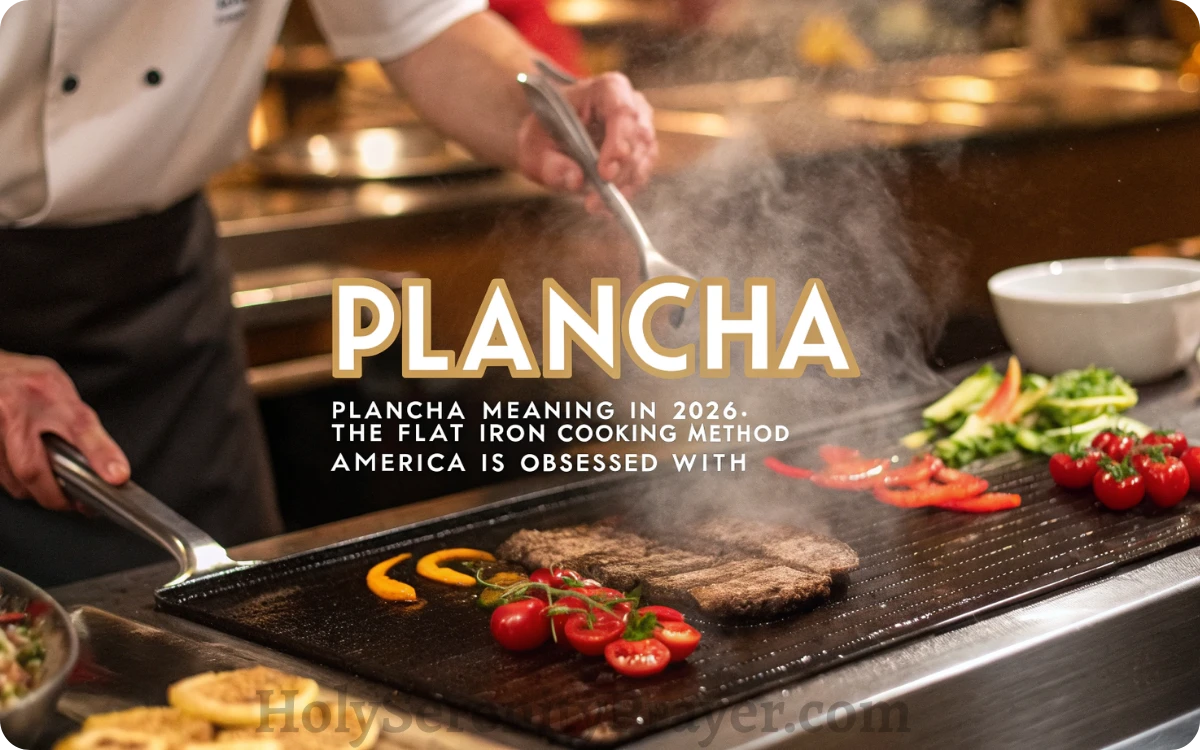
Plancha means a flat, smooth metal cooking surface used for high-heat searing — and in 2026, it’s everywhere in American kitchens. If you’ve seen it on restaurant menus or cooking videos and wondered what it actually is, this guide breaks it all down clearly. By the end, you’ll know exactly what a plancha is, how it works, and why serious home cooks are switching to it fast.
What Does Plancha Mean and Why Is Everyone in America Talking About It in 2026?
The word plancha comes directly from Spanish, meaning “metal plate” or “flat iron.” It describes both a cooking tool and a cooking technique at the same time. That dual meaning is exactly what makes it so powerful in the culinary world.
In Spain and Latin America, plancha cooking has been a kitchen staple for centuries. French chefs later embraced it and called it “à la plancha” — meaning cooked on a flat iron plate. Today, American home cooks and professional chefs are catching on in a big way.
In 2026, flat iron cooking is trending hard across the USA for a few key reasons: Home cooks want faster results with less mess. People are looking for healthier cooking methods that don’t sacrifice flavor. Social media has made plancha-cooked meals go massively viral — the sear, the crust, the color — it’s pure visual food content.
The plancha meaning goes beyond just a piece of equipment. It represents a whole philosophy — cook fast, cook hot, keep it simple, and let the food speak for itself. That mindset fits perfectly with how Americans want to eat and cook right now.
How Does a Plancha Actually Work and What Makes It Different From Everything Else in Your Kitchen?
A plancha is a thick, flat metal plate — typically made from cast iron, carbon steel, or stainless steel — that gets extremely hot and holds that heat evenly across the entire surface. There are no grates, no open flames, and no uneven hot spots. Just one flat, blazing hot surface ready to sear anything you put on it.
Here’s how the cooking process works: The surface heats up to temperatures of 450°F to 550°F or even higher. When food touches that surface, the Maillard reaction kicks in immediately — that’s the chemical process that creates the golden-brown crust and deep, complex flavor. The food sears fast on the outside while staying tender and juicy on the inside.
The three most common types of planchas used in American kitchens right now are:
Gas Plancha — heats up fast, delivers precise temperature control, and is a favorite in professional restaurant kitchens. Electric Plancha — perfect for indoor home cooking, consistent heat output, and easy to clean after use. Cast Iron Plancha — the classic choice, retains heat better than anything else, and gets better with every use as it builds seasoning.
What makes the plancha cooking method truly different is the combination of extreme heat and a flat, solid surface. No flare-ups. No uneven cooking. No food falling through grill grates. Just direct, even contact between your food and the heat — and that changes everything about the final result.
Plancha vs Grill vs Griddle vs Flat Top — Which One Should You Actually Be Cooking On?
This is one of the most searched questions about plancha cooking in 2026 — and for good reason. These four tools look similar on the surface but cook food in completely different ways. Understanding the difference helps you choose the right one for the right meal.
Cooking Surface
Temperature Range
Surface Type
Best For
Flare-Ups
Plancha
450–550°F+
Flat metal plate
Seafood, thin meats, veggies
None
Grill
400–500°F
Raised grates
Steaks, burgers, ribs
Common
Griddle
300–375°F
Flat plate
Pancakes, eggs, bacon
None
Flat Top
350–450°F
Large flat steel
High-volume cooking
None
The plancha runs hotter than a griddle and gives you a cleaner sear than a grill. A griddle is great for low-and-slow breakfast cooking but doesn’t get hot enough to create that signature plancha crust. A grill gives you smoke and char, but flare-ups are a constant battle and delicate foods like fish fall apart on the grates.
The flat top is essentially a commercial-scale plancha — same principle, just bigger. For home cooks in the USA, the plancha wins when you want speed, precision, and clean results with minimal oil. It’s the sweet spot between a grill’s intensity and a griddle’s control.
What Foods Cook Best on a Plancha and How Do You Get Restaurant-Quality Results at Home?
The short answer — almost everything cooks well on a plancha. But certain foods genuinely reach their highest potential on this surface. Here’s what you should be cooking first.
Seafood is where the plancha truly shines. Shrimp, scallops, salmon fillets, and calamari cook in minutes on a blazing hot flat iron surface. The even heat means no sticking, no falling apart, and a perfect sear every single time.
Thin cuts of meat are made for plancha cooking. Skirt steak, chicken thighs, pork tenderloin, and lamb chops hit the hot surface and instantly lock in their juices. You get a gorgeous crust on the outside and a perfectly cooked interior in under 5 minutes.
Vegetables transform completely on a plancha. Asparagus, zucchini, corn, peppers, and mushrooms caramelize fast with natural sweetness and zero mushiness. No steaming, no sogginess — just clean caramelization and real flavor.
Breakfast foods work surprisingly well too. Eggs, bacon, hash browns, and even French toast hit differently on a hot plancha surface. The even heat means everything cooks at the same pace — no more cold spots or burnt edges.
To get restaurant-quality results at home, three things matter most: Preheat the surface fully before anything goes on it. Don’t move the food for the first 60–90 seconds — that’s when the crust forms. Use high smoke point oils like avocado oil or grapeseed oil — never olive oil on high heat.
How to Use a Plancha Like a Pro in 2026 Even If You Have Never Touched One Before?
Good news — using a plancha is far simpler than most people expect. The technique is straightforward, and once you nail the basics, the results will genuinely surprise you. Here’s the exact process pros use every time.
Step 1 — Preheat for at least 10 minutes A cold plancha is the number one mistake beginners make. The surface needs to be fully up to temperature before any food touches it. Test it by flicking a drop of water — if it evaporates instantly, you’re ready.
Step 2 — Use the right oil in the right amount Apply a thin layer of avocado oil or grapeseed oil directly to the surface. Both have high smoke points that can handle plancha temperatures without burning. Never pour on too much — a light coat is all you need.
Step 3 — Don’t overcrowd the surface Leave space between every piece of food you’re cooking. Crowding drops the temperature fast and turns searing into steaming — the opposite of what you want. Cook in smaller batches and keep the results consistently excellent.
Step 4 — Leave the food alone Put it down and walk away for 60–90 seconds minimum. That resting contact time is exactly how the Maillard reaction builds your crust. Resist the urge to poke, press, or move it around.
Step 5 — Clean and season while warm After cooking, scrape the surface with a metal spatula while it’s still warm. For cast iron planchas, apply a thin coat of oil after cleaning to maintain the seasoning. This keeps the surface non-stick and better with every single cook.
Best Plancha Grills and Flat Iron Cooktops to Buy in the USA Right Now for Every Budget?
The plancha market in the USA has exploded in 2026 with options at every price point. Whether you’re testing the waters or going all-in on outdoor entertaining, there’s the right model for you. Here’s how to break it down by budget.
Budget Pick — Under $50 A cast iron plancha plate that sits directly over your existing stove burners. Heats up well, incredibly durable, and a perfect entry point for beginners who want to try flat iron cooking without a big investment. Buy this if you want to experience the plancha technique before committing to a standalone unit.
Mid-Range Pick — $50 to $150 A countertop electric plancha with adjustable temperature control and a family-sized cooking surface. These are ideal for indoor everyday cooking, produce less smoke than gas models, and clean up in minutes. This is the sweet spot for most American home cooks in 2026.
Premium Pick — $150 to $500+ A freestanding outdoor gas plancha built for serious backyard cooking and entertaining. Professional-grade heat output, massive cooking surface, and built to handle years of heavy use. If you love hosting and want results that make your guests ask questions — this is the one.
Key things to check before buying any plancha in 2026: Material — carbon steel and cast iron hold heat best and last longest. Temperature range — look for models that reach at least 450–500°F minimum. Surface size — match it to your household size, not your ambition. Grease management — removable drip trays make cleanup dramatically easier.
Is Plancha Cooking the Healthiest Way to Cook Your Food in 2026 and What Does the Science Say?
Plancha cooking consistently ranks as one of the healthiest cooking methods available — and the science backs that up clearly. The combination of intense dry heat, minimal oil, and fast cook times creates a cooking environment that preserves nutrition better than most alternatives. Here’s what the research and culinary experts actually say about it.
Less oil, less fat — because the plancha surface is so hot, food needs almost no added oil to cook properly. Fat from meats drains away from the food as it cooks rather than pooling underneath it. That means you’re eating significantly less saturated fat without changing what you’re eating.
Shorter cook times preserve nutrients — high-heat fast cooking means water-soluble vitamins like B and C stay in the food longer. Vegetables cooked on a plancha retain far more of their nutritional value compared to boiling or long roasting. Speed isn’t just about convenience — it’s genuinely better for what ends up on your plate.
No charring, no harmful compounds — open-flame grilling at high temperatures can produce compounds called HCAs (heterocyclic amines) and PAHs (polycyclic aromatic hydrocarbons) linked to increased health risks. Plancha cooking uses no direct flame, which dramatically reduces the formation of these compounds. You still get a beautiful sear and crust — without the chemical downside of charred grilling.
Portion control is easier — because plancha cooking is fast and precise, you naturally cook leaner cuts and lighter proteins more often. Seafood, vegetables, and thin meat portions become the default — not the exception. Over time, that shift alone makes a meaningful difference to your overall diet.
Doctors and nutritionists in 2026 are increasingly recommending flat iron cooking as a go-to method for patients focused on heart health and weight management. It checks every box — low fat, high flavor, fast preparation, and minimal processed ingredients. It’s not a diet trend. It’s just genuinely smart cooking.
FAQ’s
What does plancha mean in English?
Plancha translates from Spanish as “metal plate” or “flat iron” and refers to both a flat cooking surface and a high-heat cooking technique.
Is a plancha the same as a griddle?
No — a plancha runs significantly hotter, often reaching 500°F or more, while a griddle typically operates between 300–375°F.
What is cooking à la plancha?
À la plancha is a French term meaning food cooked on a blazing hot flat iron plate with minimal oil for a clean, fast sear.
Can you use a plancha indoors?
Yes — electric planchas are specifically built for indoor use and produce far less smoke than traditional grills.
What is the best material for a plancha?
Carbon steel and cast iron are the top choices because both retain heat exceptionally well and improve with proper seasoning over time.
Is plancha cooking healthy?
Yes — plancha cooking uses minimal oil, reduces harmful compounds from open flames, and preserves more nutrients through fast high-heat cooking.
What foods are best cooked on a plancha?
Seafood, thin cuts of meat, vegetables, and breakfast foods all perform exceptionally well on a plancha surface.
Conclusion
A plancha is one of the most versatile, healthy, and high-performance cooking tools available to American home cooks in 2026. It delivers restaurant-quality results with minimal oil, minimal mess, and maximum flavor in less time than almost any other method. Try it once this week — the results will make it permanent in your kitchen.
Admin of Holy Serenity Prayer. Sharing uplifting prayers and spiritual insights for a peaceful soul. I believe in the power of simple words to bring profound peace and spiritual growth to every heart.