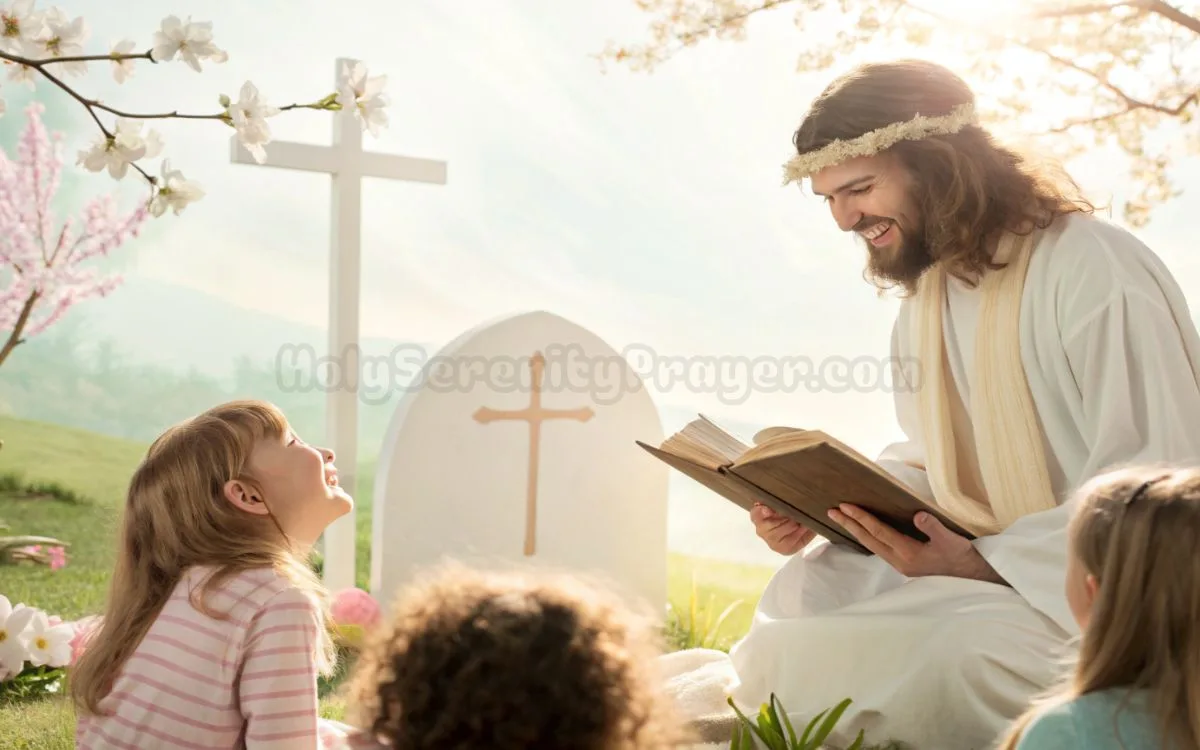
Easter is a special time when families celebrate the resurrection of Jesus and share stories of hope, love, and new beginnings with children.
90 Powerful Short and Direct Easter Story for Kids
Stories for Preschoolers – Ages 3 to 5

The Baby Lamb Who Found Jesus teaches about a little lamb who wandered away from its flock and was found by Jesus in a field. The shepherd showed bravery protecting the lamb from danger. This story connects to how Jesus is called the Good Shepherd who cares for all children. The lamb learned that Jesus always watches over those who are lost. Faith-based values are woven throughout this simple tale. Young children understand that God’s love reaches everyone, even the smallest lamb.
Mary’s Garden Surprise tells of a little girl named Mary who planted seeds in her garden with her grandmother. After winter passed, spring arrived and flowers bloomed everywhere. Her grandmother explained that just like seeds grow into new plants, Jesus rose from the dead to bring new life. The garden became a picture of the resurrection of Jesus. Mary learned about rebirth and how Easter celebrates renewal. This story uses nature to teach the spiritual meaning of Easter in words children can grasp.
The Stone That Rolled Away describes how a huge stone covered the entrance to Jesus’ tomb. Three women came early Sunday morning with spices to honor Jesus. They worried about moving the heavy stone but found it already rolled to the side. The empty tomb showed that Jesus was alive. An angel sat on the stone and told them not to be afraid. This short and direct Easter story for kids explains the power of God in simple terms.
Peter’s Happy Tears shares how Peter, one of Jesus’ best friends, felt sad after Jesus died. He cried because he had denied knowing Jesus three times. When Jesus appeared after the resurrection, Peter wept with joy instead of sadness. Jesus forgave Peter and told him to feed his sheep. This story teaches that forgiveness heals broken hearts. Children learn that mistakes can be fixed through love and second chances.
The Angel’s Good News focuses on the angel who appeared at the tomb on Easter morning. The angel wore bright white clothes that shone like lightning. He told the women that Jesus was not in the tomb because he had risen. The angel said to go tell the disciples this wonderful news. Hope spread quickly as people heard about the resurrection miracle. This message of joy and celebration is at the heart of every Easter story for kids.
Easter Eggs and New Beginnings connects the tradition of painted eggs to the Christian Easter narrative. A family decorates colorful eggs together while talking about how eggs represent new life. The hard shell breaks open to reveal a baby chick, just as Jesus broke free from death. Children enjoy the Easter egg hunt while learning its deeper meaning. This childhood Easter tradition becomes a teaching moment about resurrection and hope. Easter traditions can point to faith when families use them wisely.
The Butterfly’s Easter Lesson shows how a caterpillar wraps itself in a cocoon like Jesus in the tomb. After time passes, a beautiful butterfly emerges with colorful wings. This transformation pictures the resurrection of Jesus in nature. The butterfly flies free, bringing joy wherever it goes. Children see that rebirth happens in God’s creation all around them. This story makes the spiritual meaning of Easter easy to understand.
Tommy’s First Easter follows a young boy experiencing Easter for the first time at church. He hears the story of Jesus and asks his parents many questions. Tommy learns why people say “He is risen” on Easter Sunday. The family celebration includes special food and time together. Tommy realizes that Easter is not just about the Easter Bunny but about Jesus coming back to life. This short and direct Easter story for kids helps children understand the holiday’s true purpose.
The Empty Tomb Adventure takes readers inside the tomb where Jesus was laid. The burial cloths were folded neatly but Jesus was gone. Guards had been stationed outside but they fell asleep. When the angel appeared, the ground shook and the stone moved. The empty tomb proved that death has no power over Jesus. This adventure-style story keeps young children engaged while teaching faith.
Jesus’ Special Friends introduces children to the disciples who followed Jesus everywhere. These twelve men learned from Jesus about kindness to others and God’s love. After the resurrection, Jesus appeared to them and ate fish with them. The disciples became brave preachers who spread the good news. Friendship and caring formed the foundation of this group. Children learn that being Jesus’ friend means loving others.
The Brightest Sunday Morning describes the sun rising on Easter day with special brightness. Mary Magdalene walked to the tomb in the early morning darkness. As the sun rose, she discovered the empty tomb and saw Jesus himself. The morning light represented the light of hope returning to the world. Easter Morning Joy spread as quickly as sunlight spreads across the land. This story uses beautiful imagery to teach about the resurrection.
Lily’s Easter Discovery tells about a girl named Lily who finds Easter lilies blooming in her yard. Her mother explains that these white flowers represent the purity and new life that Jesus brings. Lily learns that flowers die in winter but return in spring, just like Jesus returned to life. The sweet smell of the lilies reminds her of the sweetness of God’s love. This story connects Easter traditions with the resurrection miracle.
The Donkey Who Carried Jesus shares the perspective of the donkey that carried Jesus into Jerusalem. The donkey felt honored to serve the king. People shouted and waved branches as they passed. The donkey remembered this special day when Jesus rode peacefully into the city. This simple story teaches humility and service. Children enjoy hearing stories told from animal viewpoints.
Three Days of Waiting explains what happened during the days between crucifixion and resurrection. The disciples were sad and scared, hiding in a locked room. They waited without understanding what would happen next. On the third day, everything changed when Jesus appeared. This story teaches patience and trusting God’s plan. The waiting made the joy of Easter morning even greater.
The Garden Where Jesus Rose describes the beautiful garden where the tomb was located. Trees and flowers surrounded the burial place. Mary Magdalene thought Jesus was the gardener when she first saw him. The garden setting shows that God brings beauty from sadness. New life blooms in places where death seemed to win. Gardens throughout the Bible represent places where God meets people.
More Posts: 90 Short Powerful Happy New Month Prayers to Start Fresh with Faith
Stories for Early Elementary – Ages 6 to 8

The Soldier Who Guarded the Tomb tells about a Roman soldier assigned to watch Jesus’ tomb. He witnessed the earthquake and saw the angel roll away the stone. Fear gripped him as the resurrection miracle happened before his eyes. The soldier later told others what he saw that Easter morning. His testimony added proof to the story of Jesus rising from the dead. Even those who did not follow Jesus could not deny what happened.
Mary Magdalene’s Easter Morning gives details about the first person to see Jesus alive. Mary Magdalene loved Jesus and stayed near the cross when he died. She came to the tomb early while it was still dark. When she saw Jesus, she initially mistook him for the gardener. Jesus called her name and she recognized his voice immediately. Her tears of sorrow became tears of joy and celebration. She rushed to tell the disciples the incredible news.
The Road to Emmaus for Kids simplifies the story of two disciples walking to a village after Easter. A stranger joined them on the road and explained scriptures about the resurrection of Jesus. They invited him to eat dinner with them. When he broke the bread, they suddenly recognized Jesus. He had been with them the whole time. This story teaches that Jesus is present even when we don’t recognize him.
Thomas and the Proof He Needed explains how Thomas doubted the resurrection at first. He said he would only believe if he could touch Jesus’ wounds. Jesus appeared and invited Thomas to touch his hands and side. Thomas believed immediately and called Jesus his Lord and God. Jesus said that those who believe without seeing are blessed. This short and direct Easter story for kids teaches about faith and believing.
The Fishermen’s Breakfast with Jesus describes when disciples went fishing after Easter. They caught nothing all night until Jesus called from the shore. He told them to throw their nets on the other side of the boat. The nets filled with so many fish they could barely pull them in. Jesus had prepared breakfast for them on the beach. This meal showed that Jesus still cared about everyday needs.
Why We Celebrate Easter gives children clear reasons for the Easter holiday. Easter celebrates the resurrection of Jesus and victory over death. It shows that God’s love is stronger than anything. People celebrate with family gatherings and church services. The holiday reminds everyone that hope is real and new life is possible. Faith grows when children understand why Easter matters.
The Crown of Thorns Explained gently tells about the crown made from thorny branches. Soldiers placed it on Jesus’ head to mock him. The thorns hurt but Jesus endured it with love. This crown represented the pain Jesus took upon himself for others. The crown of thorns became a crown of glory through the resurrection. Children learn about sacrifice and redemption through this symbol.
Pilate’s Difficult Decision simplifies the story of the Roman governor who judged Jesus. Pilate found no fault in Jesus but gave in to crowd pressure. He washed his hands to show he didn’t want responsibility for the decision. Pilate’s choice teaches about standing up for what is right. Sometimes doing the right thing is hard but important. This story develops moral lessons about courage.
The Two Marys at the Tomb focuses on Mary Magdalene and the other Mary who came to the tomb. They brought spices to anoint Jesus’ body according to custom. The angel announcement surprised them with fear and great joy. They ran to tell others about the empty tomb. Their faith and loyalty made them the first witnesses. Women played a crucial role in the Easter story.
Peter’s Denial and Forgiveness explains how Peter said three times he didn’t know Jesus. A rooster crowed just as Jesus predicted it would. Peter felt terrible about his betrayal. After the resurrection, Jesus asked Peter three times if he loved him. This gave Peter a chance to say yes three times, matching his three denials. Forgiveness and love restore what has been broken.
The Rooster That Crowed tells the story from the rooster’s point of view. The rooster crowed at dawn just as Jesus said it would. Peter heard the crow and remembered his denial. The sound reminded Peter that Jesus knew what would happen. Even a rooster played a part in God’s plan. This creative angle helps children remember the story.
Judas and the Thirty Coins carefully explains that Judas betrayed Jesus for thirty silver coins. He pointed out Jesus to the soldiers with a kiss. Later, Judas felt sorry for what he did. This story teaches that wrong choices have consequences. Forgiveness is always available when people truly repent. Children learn to think before making decisions that hurt others.
Simon Who Carried the Cross tells about a man named Simon from Cyrene. Soldiers forced him to carry Jesus’ cross when Jesus became too weak. Simon probably didn’t want this job at first. Carrying the cross changed Simon’s life forever. This act of service became something he never forgot. Children learn that helping others, even when it’s hard, matters.
The Torn Temple Curtain describes the huge curtain in the temple that separated people from God’s presence. When Jesus died, this curtain tore from top to bottom by itself. The torn curtain showed that Jesus opened the way for everyone to approach God. No more barriers existed between God and people. This miracle demonstrated the power of sacrifice and redemption. Children understand that Jesus made a way for all to know God.
Joseph’s Gift of a Tomb explains how Joseph of Arimathea gave his new tomb for Jesus’ burial. Joseph was a wealthy man who believed in Jesus. He asked Pilate for permission to take Jesus’ body. Joseph wrapped Jesus in clean linen and laid him carefully in the tomb. His generosity provided the place where the resurrection would happen. This story teaches about giving and sharing what we have.
More Posts: 90 Short Powerful Father’s Day Prayer Bless the Fathers in Your Life
Stories About Forgiveness and Love for Children
The Forgiving Father connects to the parable of the prodigal son. A young son took his inheritance and wasted it foolishly. He returned home ashamed and sorry for his choices. The father ran to meet him with open arms and threw a party. This story pictures how God forgives those who return to him. Love and generosity overflow when someone comes home to faith. The Easter message includes this kind of forgiveness.
Jesus Forgives Peter repeats the important theme of Peter’s restoration. Jesus didn’t hold Peter’s denial against him. Instead, Jesus trusted Peter to lead others and teach about faith. This restoration happened after the resurrection at breakfast by the sea. Peter’s tears of regret turned into tears of grateful joy. Forgiveness doesn’t just erase mistakes but gives new purpose. Children need to know that mistakes don’t define them forever.
Love Conquers Everything teaches that love is the strongest force in the world. Jesus showed love by dying on the cross. His resurrection proved that love wins over death. God’s love never fails or gives up on people. When children learn about love, they learn about God. Easter is the ultimate love story told through sacrifice and redemption. Every Easter story for kids should emphasize this truth.
The Good Shepherd’s Sacrifice explains how Jesus called himself the Good Shepherd. Shepherds protect their sheep from wolves and danger. A good shepherd would even die to save the sheep. Jesus laid down his life for people like a shepherd for sheep. He rose again to lead his flock forever. This faith-based value helps children understand their worth to God. The shepherd’s love is personal and protective.
Washing the Disciples’ Feet describes how Jesus served his friends at the Last Supper. He took off his outer clothing and wrapped a towel around his waist. Jesus washed each disciple’s feet like a servant would do. Peter objected at first but Jesus explained the lesson. True greatness comes through serving others with love. Kindness to others matters more than being important. This act showed humility and compassion.
The Greatest Love Story Ever Told summarizes the entire Easter narrative as a love story. God loved the world so much he sent Jesus. Jesus loved people enough to die for them. The resurrection proved that this love was real and powerful. No other story in history shows this kind of sacrifice and redemption. Children can grasp that they are loved beyond measure. Easter celebrates the greatest love of all.
Why Jesus Came to Earth answers a question many children ask. Jesus came to show what God is like in human form. He came to teach about love, forgiveness, and faith. Jesus came to die and rise again so people could live forever. His mission included healing the sick and helping the poor. The resurrection of Jesus completed God’s rescue plan. Every Easter, Christians remember why Jesus came.
The Beggar Who Met Jesus tells of a poor man sitting by the road. He called out to Jesus for help and mercy. Jesus stopped and paid attention to someone others ignored. He healed the man and changed his life. This story teaches compassion and kindness to others. Jesus cares about everyone, rich or poor. Children learn to treat all people with love.
Zacchaeus and Second Chances describes a short tax collector who climbed a tree. Zacchaeus wanted to see Jesus passing by. Jesus looked up and invited himself to Zacchaeus’ house. People criticized this choice but Jesus offered forgiveness and a fresh start. Zacchaeus changed his ways and gave back what he had stolen. Second chances and new life are possible for everyone. This story connects to the Easter themes of rebirth and renewal.
The Woman Who Washed Jesus’ Feet tells about a woman who showed great love. She cried and her tears fell on Jesus’ feet. She dried them with her hair and poured perfume on them. Religious leaders judged her but Jesus praised her faith. He said her many sins were forgiven because she loved much. Love and faith matter more than perfect behavior. This woman understood the spiritual meaning of serving Jesus.
Jesus and the Little Children shares how Jesus welcomed children when others tried to send them away. He said the kingdom of heaven belongs to those like little children. Jesus took children in his arms and blessed them. Children were important to Jesus, not bothersome. This story assures kids that Jesus loves them specially. Faith-based values include respecting and protecting children. Easter reminds everyone that childlike faith pleases God.
The Lost Sheep Found explains the parable about a shepherd with 100 sheep. When one went missing, the shepherd left the 99 to find it. He searched until he found the lost sheep. The shepherd celebrated with great joy when he brought it home. Jesus told this story to show how much God cares for each person. No one is too lost to be found by God’s love. Hope exists for everyone who has wandered away.
Loving Your Enemies – Jesus’ Way teaches one of Jesus’ hardest lessons. Jesus said to pray for those who hurt you and be kind to those who are mean. He practiced what he preached by asking God to forgive those who crucified him. This love is supernatural and comes from God. Children can learn to be peacemakers instead of fighting back. Easter shows that love changes hearts better than revenge.
The Widow’s Two Coins tells about a poor widow at the temple. She gave two small copper coins, all the money she had. Rich people gave large amounts but kept plenty for themselves. Jesus said the widow gave more than anyone because she gave everything. True giving and sharing comes from the heart. Generosity isn’t about the amount but about the attitude. This moral lesson teaches that God sees the heart.
Bartimaeus Sees Again describes a blind beggar who heard Jesus was passing by. He shouted loudly for Jesus to help him. People told him to be quiet but he shouted louder. Jesus stopped and called Bartimaeus to him. Jesus healed his blindness because of his faith. Bartimaeus followed Jesus down the road with great joy. This miracle shows that faith brings healing and hope.
More Posts: 66 Short Powerful Exam Success Wishes And Prayers
Stories About Faith and Miracles for Young Believers
Walking on Water with Jesus amazes children with this incredible miracle. Disciples were in a boat during a storm when they saw Jesus walking on the water. Peter asked to walk to Jesus and stepped out of the boat. As long as Peter kept his eyes on Jesus, he walked on water too. When he looked at the waves, he started to sink. Jesus caught him and asked why he doubted. This story teaches that faith keeps us above the storms of life.
The Blind Man Who Believed tells of a man born blind. Jesus made mud and put it on the man’s eyes. He told him to wash in a pool and the man came back seeing. Religious leaders questioned whether a miracle really happened. The healed man simply said that he was blind but now he could see. His faith grew stronger despite opposition. Easter reminds us that Jesus brings light to darkness.
Lazarus Comes Back to Life is a powerful preview of Easter. Lazarus got sick and died before Jesus arrived. His sisters Mary and Martha were heartbroken. Jesus wept with them, showing compassion and love. Then Jesus called Lazarus to come out of the tomb. Lazarus walked out alive, still wrapped in burial cloths. This resurrection miracle proved Jesus’ power over death. Children see that Jesus can do the impossible.
The Centurion’s Great Faith describes a Roman soldier whose servant was sick. The centurion believed Jesus could heal with just a word. He told Jesus not to bother coming to his house. Jesus was amazed at this man’s faith and healed the servant instantly. Even people who weren’t Jewish could have great faith. This story shows that God’s love is for everyone. Faith matters more than background or nationality.
Calming the Storm happens when disciples were crossing a lake with Jesus. A fierce storm arose and the boat filled with water. Jesus was sleeping peacefully through the chaos. The disciples woke him in fear. Jesus stood and told the wind and waves to be still. Everything became calm immediately. This miracle teaches that Jesus has power over nature and our fears.
Feeding Five Thousand People tells how a huge crowd followed Jesus all day. Evening came and people were hungry with no food available. A boy offered his small lunch of five loaves and two fish. Jesus blessed the food and it multiplied to feed everyone. Twelve baskets of leftovers remained. This miracle demonstrates God’s provision and the power of sharing. Small acts of generosity become big when Jesus is involved.
The Paralyzed Man Through the Roof shares an amazing story of faith and friendship. Four friends carried a paralyzed man on a mat to see Jesus. The crowd was too thick to get through the door. The friends dug through the roof and lowered their friend down. Jesus saw their faith and healed the man completely. Friendship and caring led to a miracle. Children learn that helping friends find Jesus is important.
The Woman Who Touched Jesus’ Robe had suffered from bleeding for twelve years. She had spent all her money on doctors with no improvement. She believed that just touching Jesus’ clothes would heal her. She pushed through the crowd and touched the edge of his robe. Power went out from Jesus and she was instantly healed. Jesus told her that her faith had made her well. Even small faith moves the heart of God.
Water Turned to Wine was Jesus’ first miracle at a wedding. The celebration ran out of wine, which would embarrass the hosts. Jesus’ mother asked him to help the situation. Jesus told servants to fill six large water jars with water. When they drew it out, the water had become the best wine. This miracle showed Jesus’ power and his care for joy and celebration. Jesus wants people to enjoy life.
The Fig Tree Lesson happened when Jesus saw a fig tree with leaves but no fruit. He spoke to the tree and it withered immediately. Disciples were amazed at how quickly it happened. Jesus taught them that faith can move mountains. This story emphasizes that genuine faith produces real results. Trees with leaves should have fruit, and Christians should show their faith through actions. The Easter season calls for authentic faith.
The Mustard Seed Faith uses the tiniest seed to teach about faith. Jesus said that faith as small as a mustard seed can accomplish great things. The tiny seed grows into a large plant where birds nest. Small beginnings lead to big results with God. Children don’t need perfect faith, just sincere faith. Even tiny faith in the resurrection changes everything. God honors whatever faith we offer him.
The Canaanite Woman’s Persistence shows a mother’s faith for her suffering daughter. She was not Jewish but she believed Jesus could help. She kept asking even when Jesus tested her faith. Her persistence and humility impressed Jesus deeply. He healed her daughter from a distance. This woman’s faith overcame every obstacle. Patience and determined faith receive answers. The Easter message includes that God responds to persistent faith.
Ten Lepers Healed tells of ten men with leprosy who asked Jesus for healing. Jesus told them to go show themselves to the priests. As they went, all ten were healed of their disease. Only one came back to thank Jesus, and he was a Samaritan. Jesus asked where the other nine were. This story teaches gratitude and faith. Saying thank you matters to God and people. The one who returned received even more than physical healing.
The Deaf Man Who Heard describes Jesus healing a man who couldn’t hear or speak. Jesus put his fingers in the man’s ears and touched his tongue. He looked up to heaven and said “Be opened.” Immediately the man could hear and speak clearly. People were amazed at everything Jesus did. This miracle shows Jesus’ compassion for those with disabilities. Hope exists for every kind of brokenness. Easter proclaims healing and wholeness.
The Bent Woman Stands Straight tells of a woman bent over for eighteen years. She couldn’t stand up straight at all. Jesus saw her in the synagogue and called her forward. He said she was set free from her ailment. Jesus put his hands on her and immediately she straightened up. She praised God with a loud voice. Religious leaders complained but Jesus defended his action. Compassion and love are always appropriate, even on the Sabbath.
Modern Easter Stories That Connect Today’s Kids to Faith
Emma’s Easter Egg Hunt Discovery follows a modern girl searching for colorful eggs in her backyard. She finds a special golden egg with a note inside. The note tells the story of the empty tomb and the resurrection of Jesus. Emma’s parents use the Easter egg hunt to teach about new life. The painted eggs become reminders of the Easter message. This childhood Easter tradition gains deeper meaning. Family celebration combines fun with faith.
The Church Bell That Rang on Easter describes a church with a beautiful bell tower. The bell remained silent on Good Friday out of respect. On Easter Sunday morning, the bell rang joyfully to announce “He is risen.” The sound carried across the town, waking people with good news. Children in the story learned why the bell’s ringing mattered. The bell represented voices proclaiming the resurrection of Jesus. Joy and celebration filled the air with each ring.
Grandma’s Easter Story Time shows a grandmother gathering her grandchildren. She opens the Bible and tells them the Easter story for kids in simple words. Grandma explains each part with patience and love. The children ask questions and Grandma answers each one. They learn about Jesus, the Last Supper, the crucifixion, and the resurrection miracle. Community and family bonding happens through story time. Grandma’s faith passes to the next generation.
The Easter Play at School takes place at a Christian school presenting an Easter program. Children dress as disciples, angels, and Mary Magdalene. They act out finding the empty tomb and hearing the good news. Parents watch as the children proclaim “He is risen” together. The play teaches kids the Easter story while building confidence. Stories for children come alive through drama. The spiritual meaning of Easter touches both actors and audience.
Jake Learns About Resurrection follows a boy whose pet goldfish died. Jake feels sad and doesn’t understand death. His father uses the Easter story to explain resurrection and hope. Jake learns that Jesus conquered death so people can live forever. The faith lesson helps Jake process his sadness. Hope after sorrow becomes real through the resurrection of Jesus. This gentle story handles a tough topic with compassion.
The New Easter Dress tells about a girl named Sofia excited about her special Easter dress. She plans to wear it to church on Sunday morning. Her mother explains that the new dress represents the new life Jesus gives. Just as Sofia puts on new clothes, God gives people new hearts. The Easter celebration includes looking your best for a special day. Joy comes from what Easter means, not just what we wear. The dress becomes a teaching moment about renewal.
Baking Easter Bread with Mom shares a family tradition of baking special bread. The mother and children mix ingredients while talking about Easter. The bread rises in the oven just as Jesus rose from the tomb. The sweet smell fills the house with joy. Breaking bread together reminds them of the Last Supper. Family celebration and faith blend through this Easter tradition. Sharing the bread with neighbors spreads love and kindness.
The Sunrise Service Adventure describes a family waking early for Easter sunrise service. They drive to a hilltop while it’s still dark outside. As the sun rises, the pastor tells the resurrection story. The sunrise pictures Jesus bringing light after the darkness of death. Everyone sings hymns of joy as the sky grows bright. This Easter service connects nature with the spiritual meaning of Easter. Community and family bonding happens in this special gathering.
Mia’s Easter Lily Plant explains why Easter lilies appear in churches every spring. Mia’s family buys a white lily to place in their home. Her dad tells her that the lily’s white color represents purity and hope. The trumpet shape points upward toward heaven. The lily blooms in spring, the season of renewal and new life. Mia learns that many Easter traditions use symbols. The flower reminds everyone of the resurrection miracle.
The Empty Cross in the Garden shows children visiting a garden with a wooden cross. A tour guide explains that the cross is empty because Jesus isn’t there anymore. The crucifixion happened but the story didn’t end there. The resurrection means the cross is a symbol of victory, not defeat. Hope stands taller than suffering. The garden setting recalls where Jesus was buried and rose again. Faith grows as children see this powerful symbol.
Carlos Shares His Easter Story features a boy excited to tell his friend about Easter. Carlos explains the resurrection of Jesus in his own simple words. His friend asks questions and Carlos does his best to answer. Sometimes Carlos doesn’t know everything but he shares what he knows. His faith and enthusiasm make an impact on his friend. Children can be witnesses to the Easter message. Sharing the story spreads hope and love.
The Butterfly That Taught About Resurrection returns to the butterfly theme with a classroom lesson. A teacher shows students a butterfly emerging from its chrysalis. The butterfly struggled to break free but finally flew away. The teacher connects this to how Jesus emerged from the tomb. Rebirth happens in nature and in faith. The students watch in wonder at the transformation. This Easter story for kids uses science to teach spiritual truth.
Sophie’s Questions About Easter presents a curious girl with many questions. She asks why Jesus had to die and why people celebrate Easter. Her parents patiently answer each question with love. Sophie learns about sacrifice and redemption at her level. Her questions lead to deeper family discussions about faith. Community and family bonding strengthens through honest conversations. Sophie’s curiosity helps her grow in understanding.
The Family’s First Easter Together tells about a family that just started attending church. They experience Easter Sunday for the first time. The church welcomes them warmly and explainsthe Easter traditions. The family hears the resurrection story and feels hope stirring. They participate in singing and celebrating with the congregation. This first Easter becomes a turning point in their faith journey. Joy and celebration mark this special day.
The Easter Basket with a Message describes an Easter basket filled with candy and toys. At the bottom, a child finds a small book about the resurrection of Jesus. The parents explain that the basket’s treats are fun but the story is the real gift. Easter combines joy with deeper meaning. The Easter Bunny and egg hunts can coexist with teaching faith. Parents can use every Easter tradition as a teaching opportunity. The message matters most.
Easter Parables and Life Lessons for Character Building
The Sower and the Seeds teaches about a farmer planting seeds in different soils. Some seeds fell on the path and birds ate them. Some fell on rocky ground and plants had no roots. Some fell among thorns that choked them. But some seeds fell on good soil and produced a great crop. Jesus explained that the seed is God’s word and the soil is people’s hearts. Good hearts receive the word and grow in faith. This parable teaches about being receptive to spiritual truth.
The Pearl of Great Price tells of a merchant searching for fine pearls. He found one pearl so valuable he sold everything to buy it. Jesus said the kingdom of heaven is like that pearl. Some things are worth giving up everything else to obtain. Faith and knowing God matter more than material possessions. Children learn about priorities and what truly matters. The Easter message is the greatest treasure anyone can find.
The Wise and Foolish Builders compares two men building houses. The wise man built his house on solid rock. The foolish man built his house on sand. When storms came, the house on rock stood firm. The house on sand collapsed completely. Jesus said that hearing his words and doing them makes you wise. Faith without action is like building on sand. Easter calls people to build their lives on the solid rock of Jesus.
The Good Samaritan’s Kindness remains one of the most famous parables. A man was robbed and left injured on the road. Religious people passed by without helping. A Samaritan, someone usually looked down upon, stopped to help. He bandaged wounds, paid for care, and showed true compassion. Jesus said to go and do likewise. Kindness to others breaks down barriers and prejudice. Love is shown through actions, not just words.
The Lost Coin Found tells of a woman who lost one of her ten silver coins. She lit a lamp and swept the entire house searching carefully. When she found the coin, she called friends to celebrate with her. Jesus said heaven celebrates like this when one sinner repents. Every person matters greatly to God. The search represents God’s active pursuit of those who are lost. Joy erupts when someone comes home to faith.
The Pharisee and the Tax Collector contrasts two men praying at the temple. The Pharisee thanked God that he wasn’t like other sinners. The tax collector stood far away and begged God for mercy. Jesus said the humble tax collector went home justified. God opposes the proud but gives grace to the humble. This parable teaches humility and honest self-assessment. True faith admits need for God’s mercy.
The Workers in the Vineyard describes a landowner hiring workers throughout the day. Some worked all day, others just one hour. At evening, everyone received the same pay. Those who worked longer complained about unfairness. The landowner said he could do what he wanted with his money. Jesus taught that God’s generosity doesn’t follow human logic. Grace is a gift, not something earned. This challenges ideas about fairness and reward.
The Wedding Feast Invitation tells of a king preparing a wedding feast for his son. Invited guests made excuses and refused to come. The king then invited everyone from the streets to fill the banquet hall. One guest came without proper wedding clothes and was removed. This parable teaches about accepting God’s invitation. The feast represents heaven and the invitation is for everyone. Rejecting the invitation has serious consequences. Easter is part of that invitation to new life.
The Rich Fool’s Mistake warns about a rich man with abundant crops. He decided to build bigger barns to store everything. He planned to relax and enjoy life for many years. But God said his life would end that very night. Jesus asked what good wealth is if you lose your soul. This parable teaches that life is more than possessions. True riches come from being rich toward God. Easter reminds us that life continues beyond death.
The Persistent Widow shows a widow repeatedly asking a judge for justice. The judge didn’t care about God or people. But the widow’s constant requests wore him down. Finally, he gave her justice just to stop her from bothering him. Jesus said if an unjust judge responds to persistence, how much more will God respond. This teaches about persistent prayer and not giving up. Faith includes patience and determination.
The Two Sons tells of a father asking his sons to work in the vineyard. The first son said no but later changed his mind and went. The second son said yes but never went. Jesus asked which son did what the father wanted. The one who actually went, despite his initial refusal, obeyed. Actions matter more than words. This parable calls people to genuine obedience. Faith shows itself through doing what God asks.
The Unmerciful Servant describes a servant who owed a huge debt he couldn’t pay. His master forgave the entire debt out of compassion. That same servant then refused to forgive a small debt someone owed him. The master heard about this and punished the unmerciful servant. Jesus taught that forgiveness received must be forgiveness given. We should treat others as God has treated us. Easter demonstrates the ultimate act of forgiveness.
The Ten Virgins tells about ten bridesmaids waiting for a wedding. Five were wise and brought extra oil for their lamps. Five were foolish and brought no extra oil. When the groom was delayed, all fell asleep. At midnight, the groom arrived and the lamps were needed. The foolish virgins had no oil and missed the wedding. This parable teaches about being prepared and ready. Faith means staying ready for Jesus’ return. The Easter message includes that Jesus will come again.
The Talents Given and Used describes a master giving different amounts of money to three servants. Two servants invested and doubled their money. One servant buried his talent in fear. The master praised those who took risks and produced results. The fearful servant lost even what he had. This parable teaches using gifts God gives us. Faith involves taking action, not playing it safe. Easter calls people to live boldly for God.
The Sheep and the Goats presents a future scene of Jesus separating people. Sheep go on his right, goats on his left. The sheep fed the hungry, welcomed strangers, and visited prisoners. They didn’t realize they were serving Jesus in these actions. The goats failed to help others in need. Jesus identified with the least of these. This parable emphasizes that faith shows itself through compassion and service. Easter transforms how we treat others.
FAQ’s
What is the Easter story in simple words for kids?
Jesus died on the cross but came back to life on the third day, showing God’s love is stronger than death.
How do I explain Easter to my 5-year-old?
Tell them Jesus is like a superhero who defeated death, giving believers the chance to live forever in heaven.
What is the main message of the Easter story for children?
That Jesus loves us so much he gave his life, and his resurrection brings hope and new life to everyone.
How long should an Easter story for kids be?
Aim for 3–5 minutes for preschoolers and up to 10 minutes for older children.
What are the key events of Easter in order?
Palm Sunday, the Last Supper, Jesus’ crucifixion, his burial, and his resurrection on Sunday.
How can I make Easter stories engaging for young children?
Use fun voices, ask questions, add props, and let children act out simple parts.
Are these stories biblically accurate?
Yes, they are based on biblical accounts but simplified for children’s understanding.
What age group are these 90 Easter stories suitable for?
They fit ages 3 to 12, with different sections for different developmental levels.
Can I use these stories for Sunday School lessons?
Absolutely—perfect for Sunday School, VBS, and home devotions.
How do I teach the crucifixion without scaring kids?
Focus on Jesus’ love, avoid graphic details, and follow quickly with the joy of the resurrection.
Why are Easter eggs part of the celebration?
Easter eggs symbolize new life and resurrection, and decorating them is a fun family tradition.
What does the Easter Bunny have to do with Jesus?
It’s a separate cultural tradition, but families can enjoy both while keeping Jesus central.
How do I connect Easter traditions to the resurrection?
Explain that spring, butterflies, and eggs remind us of new life, just like Jesus rising.
What Bible verses should kids memorize about Easter?
Luke 24:6 “He is not here; He has risen.” and John 3:16 about God’s love.
Can toddlers understand the Easter story?
Yes—toddlers can grasp that Jesus loves them, died, and came back to life.
What crafts go with Easter stories?
Resurrection gardens, empty tomb crafts, butterflies, flowered crosses, and painted eggs.
How often should I tell Easter stories to my kids?
Share them often during Easter season, especially the week before Easter.
What makes a good short and direct Easter story for kids?
Simple language, one clear message, age-appropriate details, and a focus on hope and love.
How do I answer when kids ask why Jesus had to die?
Explain that Jesus took the punishment for wrong things so we can be close to God forever.
What’s the difference between Good Friday and Easter Sunday?
Good Friday remembers Jesus’ death, and Easter Sunday celebrates his resurrection.
Conclusion
These 90 short and direct Easter story for kids help families share the resurrection of Jesus with joy, hope, and faith that builds lasting spiritual foundations. Every Easter celebration becomes more meaningful when children understand the true story of God’s love and the new life that Jesus brings through his victory over death.

Admin of Holy Serenity Prayer. Sharing uplifting prayers and spiritual insights for a peaceful soul. I believe in the power of simple words to bring profound peace and spiritual growth to every heart.