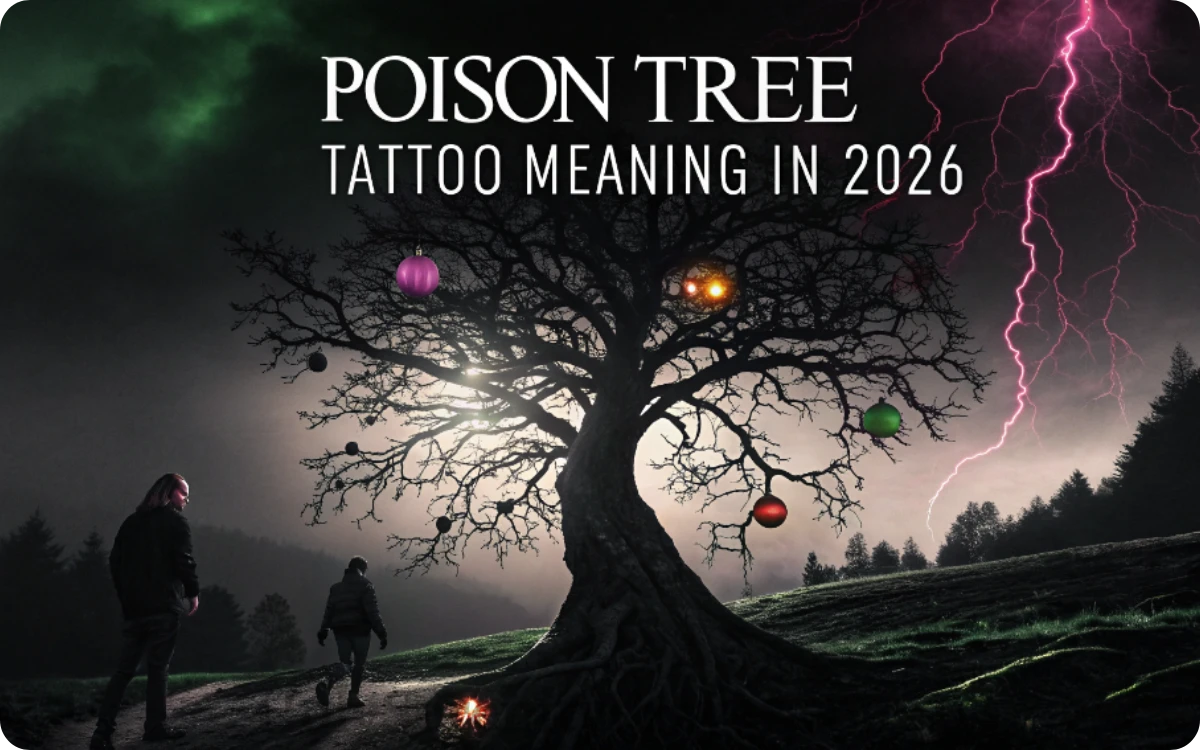
A poison tree tattoo carries deep meaning rooted in suppressed anger, emotional pain, and personal transformation. It speaks to people who have survived inner battles and want to wear that story on their skin. This powerful symbol continues to grow in popularity across the USA in 2026.
What Does a Poison Tree Tattoo Really Mean in 2026
A poison tree tattoo is one of the most emotionally loaded designs in modern tattoo culture. It represents buried feelings, unresolved anger, and the quiet destruction that comes from keeping emotions locked inside. In 2026, Americans are choosing this tattoo not just for its dark beauty but for its deeply personal message.
The core meaning centers around emotional suppression. When you hold anger inside without expressing it, it grows into something dangerous — just like a poisoned tree bearing toxic fruit. This tattoo is a visual confession of that inner experience.
Many people also see it as a symbol of survival. They have been through emotional chaos, toxic relationships, or personal loss — and they came out the other side. The poison tree marks that journey in a raw and honest way.
It also carries themes of caution and self-awareness. It reminds the wearer to acknowledge their emotions before they become destructive. In a world where mental health conversations are growing, this tattoo hits different.
William Blake’s Poem and How It Shapes Poison Tree Tattoo Symbolism
The poison tree tattoo draws direct inspiration from William Blake’s 1794 poem A Poison Tree. In the poem, the speaker nurtures hidden anger until it grows into a poisoned apple that destroys their enemy. This literary foundation gives the tattoo a layer of intellectual and emotional depth most designs simply do not have.
Blake’s poem explores a universal human truth — unexpressed anger is self-destructive. When you suppress instead of speak, the emotion does not disappear. It festers, grows roots, and eventually poisons everything around it.
Tattoo wearers who know the poem are making a conscious literary statement. They are saying they understand this cycle, have lived through it, and are choosing to acknowledge it openly. That level of self-awareness is powerful and deeply respected in tattoo communities across the USA.
The poem’s imagery — a dark tree, glowing apple, and a fallen enemy — translates beautifully into tattoo art. Artists use these elements to create designs that are visually stunning and symbolically layered. Every line of ink carries the weight of Blake’s original warning.
More Posts: LFG Meaning in 2026: What It Really Means and How Americans Use It Today
Hidden Emotions and Dark Meanings Behind Poison Tree Tattoo Designs
At its darkest, the poison tree tattoo is a symbol of emotional decay. It reflects the slow rot that happens inside a person who refuses to deal with grief, anger, or betrayal. The tree becomes a mirror of what is happening beneath the surface.
Suppressed grief is one of the most common meanings people attach to this tattoo. Losing someone, being betrayed, or carrying childhood trauma can leave wounds that never fully heal. The poison tree becomes a tribute to that hidden pain.
Some wearers use it to represent toxic relationships they have left behind. The poisoned fruit symbolizes something that looked beautiful but caused real damage. It is a reminder never to return to what once hurt them.
Others give it a meaning of inner conflict and self-destruction. The idea that your own unprocessed emotions can become your biggest enemy is a theme many people deeply connect with. This interpretation makes the tattoo deeply personal and psychologically rich.
There is also a rebellious undertone in some poison tree tattoos. The wearer is not ashamed of their darkness. They are owning it, displaying it, and declaring that they survived what almost destroyed them.
Popular Poison Tree Tattoo Styles and Visual Elements American Tattoo Lovers Are Choosing
In 2026, American tattoo lovers are gravitating toward several strong visual styles for the poison tree design. The style you choose communicates your personal meaning just as much as the symbol itself. Each variation tells a slightly different story.
Black and grey realism is the most popular choice right now. Deep shadows, intricate bark textures, and detailed roots make the tree feel alive and threatening. This style perfectly captures the emotional weight of the symbolism.
Neo-traditional style brings bold lines and rich jewel tones — deep purples, dark reds, and forest greens. These colors amplify the feeling of beauty hiding danger. It is a visually striking choice that stands out instantly.
Minimalist linework is growing fast among younger Americans who prefer clean, understated designs. A single bare tree with one dark apple communicates the full message without overwhelming detail. Simple does not mean shallow — this style hits just as hard.
Common visual elements added to the design include: Dark veined apples to represent toxic emotion ready to burst. Tangled exposed roots to show deep-seated, unresolved pain. Drooping or dead leaves to symbolize emotional exhaustion. Serpents or skulls to add layers of danger or mortality. Birds breaking free to represent liberation from that emotional weight.
More Posts: Glizzy Meaning in 2026 – What It Stands For, How It’s Used & Everything You Need to Know
Best Placement Ideas for a Poison Tree Tattoo on Your Body
Placement changes the entire energy of a poison tree tattoo. Where you put it on your body sends a message about how personal or visible you want that meaning to be. This is a choice that deserves as much thought as the design itself.
The forearm is the most popular placement in the USA right now. It keeps the tattoo visible and exposed, which signals openness about the emotions it represents. Many wearers want the reminder in their line of sight every single day.
The upper arm or sleeve allows for a larger, more detailed composition. Artists can extend the roots down the forearm and bring branches toward the shoulder. This creates a dramatic, flowing piece that tells a full visual story.
The back is for those who want the tattoo to remain private and intimate. A full back poison tree is a stunning, large-scale piece that stays close to the body. It feels more like a personal secret than a public statement.
The chest or sternum placement sits directly over the heart. This is powerful symbolism — wearing your emotional pain literally over the place where love and hurt live. It is a deeply intentional and meaningful choice.
The ribcage is chosen by people who want the tattoo hidden unless they choose to show it. The pain of the placement itself also connects to the theme of emotional suffering. Many wearers say that parallel is completely intentional.
How to Personalize Your Poison Tree Tattoo with Deep Personal Meaning
The poison tree tattoo becomes truly yours when you add elements tied to your specific story. Generic designs are beautiful, but a personalized design carries emotional weight that is impossible to replicate. This is how you turn body art into autobiography.
Start by asking yourself what specific emotion or experience this tattoo is meant to represent. Is it grief, anger, a toxic relationship, childhood trauma, or inner conflict? Naming that clearly helps your artist create something that actually reflects your truth.
Consider adding initials, dates, or coordinates tied to the event or person connected to your story. These subtle details make the tattoo deeply personal without screaming explanation to every viewer. The meaning lives in the details.
Contrast is powerful in poison tree designs. Some people add blooming flowers on one side and dying branches on the other to show healing alongside pain. This duality represents the full journey — not just the darkness, but the growth that came after.
Talk to your tattoo artist about your emotional intent. A skilled artist can use shading, line weight, and composition to visually communicate the exact feeling you carry. The collaboration between your story and their craft is where the magic happens.
More Posts: OOTD Meaning in 2026 — What It Stands For and Why Everyone’s Still Using It
What to Tell Your Tattoo Artist Before Getting a Poison Tree Tattoo
Walking into your tattoo session prepared makes the difference between a good tattoo and a great one. Your artist cannot read your mind, but they can bring your meaning to life when you communicate clearly. Here is exactly what to share before the needle touches your skin.
Explain the emotional meaning behind your design. Tell them whether this represents healing, pain, survival, or warning. That emotional context shapes every artistic decision they make.
Share visual references you love — photos, illustrations, or even paintings. Be specific about elements you want included, like exposed roots, dark fruit, or bare branches. The more concrete your vision, the more accurate the final result.
Discuss the style you want — realism, neo-traditional, blackwork, or minimalist. Each style creates a completely different emotional atmosphere in the finished piece. Make sure you and your artist are aligned before the session starts.
Be honest about your pain tolerance and placement preference. Ribs and sternum placements are intense sessions, and knowing this upfront helps you prepare mentally. A comfortable client makes for a better tattoo experience overall.
Ask to see a custom sketch before the appointment. Reviewing the design gives you the chance to request adjustments before anything is permanent. Never settle for a design that does not fully feel like yours.
FAQ’s
What is the main meaning of a poison tree tattoo?
A poison tree tattoo mainly symbolizes suppressed anger, emotional pain, and the destructive consequences of unresolved feelings.
Is the poison tree tattoo based on a real poem?
Yes, it is inspired by William Blake’s 1794 poem A Poison Tree, which explores how hidden anger grows into something dangerous.
What does the apple in a poison tree tattoo mean?
The dark apple represents toxic emotion, dangerous outcomes, or the poisonous fruit of bottled-up anger and resentment.
Is a poison tree tattoo negative or positive in meaning?
It can be both — it represents pain and darkness but also survival, self-awareness, healing, and emotional strength.
Where is the best place to get a poison tree tattoo?
The forearm, chest, and back are the most popular placements in the USA depending on how visible or personal you want it.
What style works best for a poison tree tattoo?
Black and grey realism and neo-traditional are the top styles chosen in 2026 for their emotional depth and visual impact.
Can anyone get a poison tree tattoo or does it need a personal reason?
Anyone can get it, but most people who choose this design connect it to a deeply personal emotional experience in their life.
Conclusion
The poison tree tattoo is one of the most symbolically powerful designs in American tattoo culture in 2026. It speaks to real human emotions — anger, pain, survival, and transformation — in a way few other designs can match. If this symbol resonates with your story, it deserves to be worn with intention and pride.

Admin of Holy Serenity Prayer. Sharing uplifting prayers and spiritual insights for a peaceful soul. I believe in the power of simple words to bring profound peace and spiritual growth to every heart.